
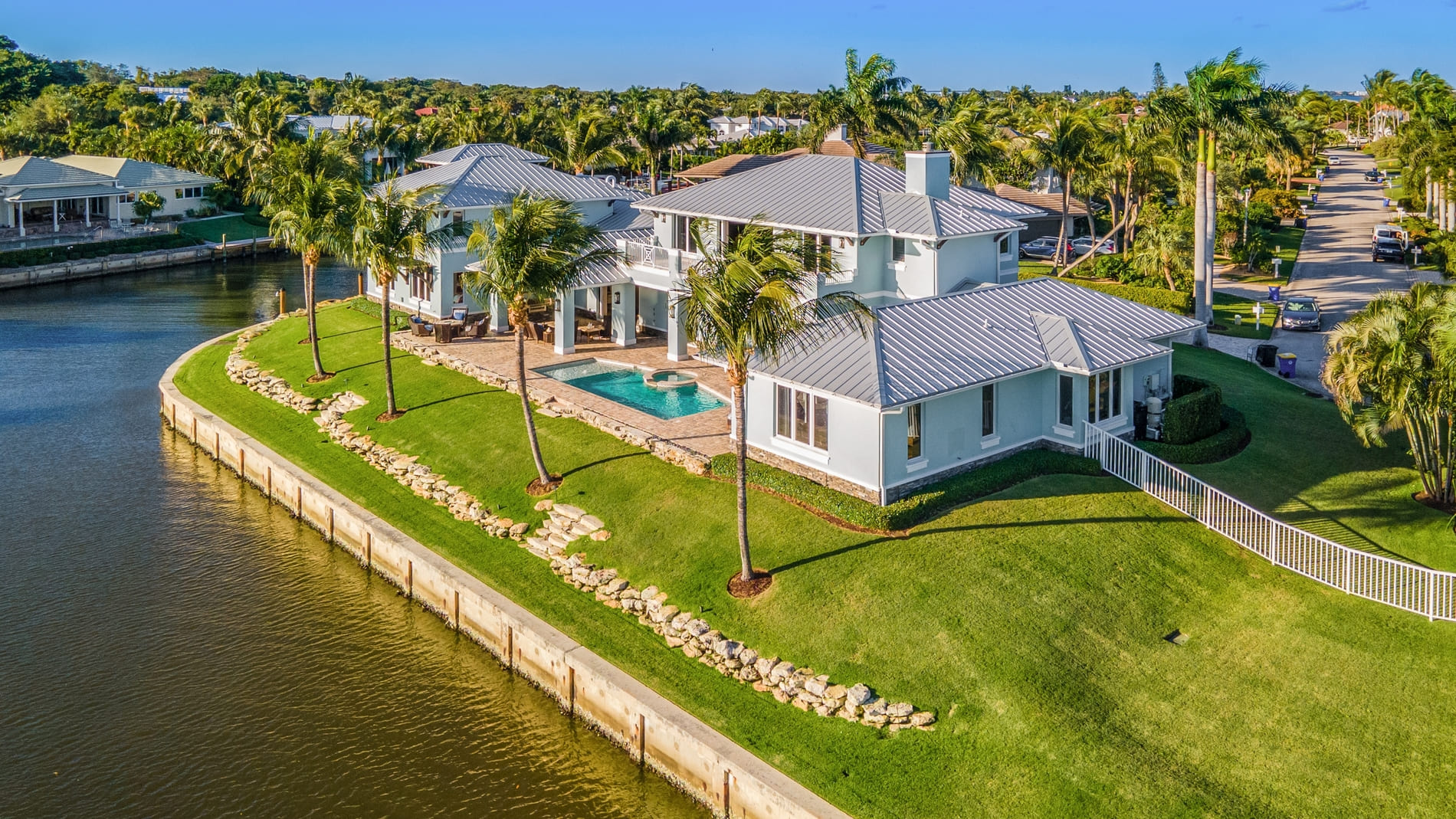
If you're shopping for waterfront property in Martin County with a specific budget, you're probably wondering whether to stretch for direct Intracoastal access or save $500,000-$1 million by purchasing canal waterfront. We work with boaters making this exact decision regularly, and the questions stay remarkably consistent: Is Intracoastal access worth the premium? Will I regret choosing canal over direct water? How much does dock depth and ocean access time really matter?
Let me walk you through the real differences between Intracoastal and canal properties, what drives the substantial price gap, and how to match your actual boating priorities with the right waterfront type.
Understanding Martin County's Waterfront Geography
Martin County's waterfront real estate divides into several distinct categories based on water access type and location. The Indian River, locally called the Intracoastal Waterway, runs through the county providing the primary north-south navigation route connecting to the Atlantic Ocean through the St. Lucie Inlet.
The St. Lucie River system feeds into the Intracoastal from the west, creating the confluence where Stuart's downtown sits. This convergence point creates exceptional boating access with protected water stretching in multiple directions and relatively quick ocean entry through the inlet.
Canal systems throughout Martin County connect residential neighborhoods to either the Intracoastal or St. Lucie River through man-made waterways. These canals extend waterfront living inland from the main water bodies, creating thousands of waterfront home sites that wouldn't exist relying only on natural shoreline.
The canal systems vary dramatically in quality, depth, bridge restrictions, and ocean access time. Some canals provide deep-water access with minimal bridges between your dock and open water, while others involve shallow depths, multiple low bridges, or circuitous routes requiring 30-45 minutes to reach the inlet.
Direct Intracoastal properties sit on the main channel itself, offering immediate access to deep protected water and the most direct routes to the ocean. These properties represent the premium waterfront category, commanding the highest prices due to superior location and access.
The price hierarchy follows water access quality. Direct Intracoastal waterfront in desirable areas ranges from $2 million to $8 million+ for estate properties, while canal homes in the same general areas run $600,000 to $2 million depending on canal quality, home size, and specific location.
Direct Intracoastal Properties: What You're Paying For
Water Access and Navigation
Intracoastal properties provide immediate access to the main navigation channel with depths typically ranging from 8 to 12+ feet at your dock. You back your boat out and you're already in the primary waterway used by vessels transiting the coast, creating the most straightforward boating access possible.
The direct channel access eliminates concerns about low bridges, shallow canal depths, or navigating through residential canal systems where no-wake zones and tight turns slow progress. You leave your dock at cruise speed within minutes, heading north or south on the Intracoastal or turning toward the St. Lucie Inlet for ocean access.
Ocean access time from most Martin County Intracoastal properties runs 10-20 minutes depending on your specific location and boat speed. Properties near the Stuart causeway or further south require slightly longer runs than those positioned closer to the inlet, but all provide relatively quick ocean entry compared to more distant canal locations.
The deep water at Intracoastal docks accommodates larger vessels without draft restrictions that limit canal properties. Boats drawing 4-6 feet or more operate comfortably at Intracoastal docks, while many canal systems restrict you to shallower-draft vessels or create access challenges at low tide.
Views and Atmosphere
Intracoastal properties offer expansive water views across the wide channel, often seeing a mile or more to the opposite shore. The visual scale creates a sense of openness and connection to the water that canal properties with their narrower waterways can't replicate.
The boat traffic on the Intracoastal provides constant interest with everything from small fishing boats to mega-yachts transiting past your property. Some owners appreciate the activity and connection to the boating community, while others find the commercial traffic and weekend boat parade intrusive depending on personality and location.
Sunrises or sunsets over the Intracoastal, depending on your shore orientation, create dramatic daily spectacles that many waterfront buyers specifically seek. The east-facing properties capture sunrise over the water, while west-facing locations provide sunset views across the channel.
The trade-off for these expansive views often involves less yard depth, as Intracoastal lots tend to be narrower and deeper than canal properties. You're maximizing water frontage while accepting potentially less total lot size than equivalently priced canal properties might offer.
Property Costs and Maintenance
The premium for Intracoastal access ranges from $500,000 to over $1 million compared to similar homes on quality canal systems. A $2 million Intracoastal home might compare to a $1.2-$1.5 million canal property with similar house size and finishes, with the price gap entirely attributable to water access type.
Seawall maintenance on Intracoastal properties faces more demanding conditions than protected canal environments. The main channel experiences stronger currents, larger boat wakes, and more erosion pressure requiring robust seawall construction and diligent maintenance. Seawall replacement costs run $600-$1,500 per linear foot, translating to $60,000-$150,000+ for typical waterfront properties.
Insurance costs reflect the increased exposure on main channel properties. Flood insurance premiums run higher for Intracoastal locations, particularly those in velocity zones or elevated flood zones. The additional annual costs might reach $2,000-$5,000+ compared to canal properties in less exposed flood zones.
Property taxes on Intracoastal homes reflect the premium values, generating annual tax bills of $40,000-$80,000+ on multi-million dollar estates. The taxes continue regardless of how frequently you use the water access, requiring buyers to ensure the premium aligns with actual boating priorities.
Resale Considerations
Intracoastal properties maintain strong demand from serious boaters who understand and value the access advantages. The limited inventory of true Intracoastal frontage in Martin County creates scarcity supporting prices, though the high absolute values limit the buyer pool to affluent purchasers.
The properties tend to hold value well during market cycles, as serious boaters continue seeking the best available access even during slower economic periods. The premium over canal properties might compress slightly during downturns but typically maintains substantial differential.
Marketing Intracoastal properties attracts regional and national buyers, not just local purchasers, as serious boaters from other markets specifically seek Martin County's combination of protected water and quick ocean access. This broader buyer pool supports pricing during resale.
Canal Waterfront Properties: Value and Trade-offs
Canal System Variations
Not all canal properties offer equivalent access. The best canal systems provide deep water, minimal bridges between your location and the Intracoastal or river, and well-maintained channels allowing comfortable navigation.
Canals in Sewall's Point, select Stuart neighborhoods, and certain Jensen Beach areas provide excellent access with depths of 6-8+ feet, no fixed bridges, and relatively direct routes to open water. These premium canals command the highest prices within the canal category, sometimes approaching entry-level Intracoastal pricing for exceptional properties.
Other canal systems involve shallower depths of 4-5 feet, multiple low bridges restricting boat size, or circuitous routes adding 15-30 minutes to ocean access compared to direct Intracoastal locations. These canals serve buyers with smaller boats, those prioritizing protected dockage over ocean access, or buyers accepting limitations in exchange for substantial cost savings.
The specific canal matters enormously when evaluating properties. Two homes at similar prices in different canal systems might offer vastly different boating experiences based on depth, bridge restrictions, and navigation routes to open water.
Access Time and Bridge Restrictions
Canal properties typically add 5-15 minutes to ocean access time compared to equivalent Intracoastal locations, assuming no bridge height restrictions. The additional navigation through canal systems and into the main channel extends your trip before reaching the inlet.
Bridge clearances become the critical limitation for many canal systems. Fixed bridges with 18-25 foot clearances restrict you to boats that fit under those heights, eliminating larger center consoles, express cruisers, and flybridge vessels popular with serious offshore anglers and cruisers.
Some canal systems include bascule or drawbridges that open on request, allowing passage of taller vessels. However, the bridges operate on schedules or require advance notice, adding complexity and time to every trip. Weekend bridge schedules might restrict openings to specific hours, limiting your spontaneity.
Buyers planning boats over 23-25 feet tall must verify bridge clearances carefully before purchasing canal properties. Many buyers discover bridge restrictions only after closing, forcing them to choose between keeping their planned boat elsewhere or accepting a different vessel type than they intended.
Cost Savings and Value Proposition
Canal properties deliver the most significant advantage through cost savings ranging from $300,000 to over $1 million compared to direct Intracoastal homes. A buyer with a $1.5 million budget faces choosing between entry-level Intracoastal or premium canal property with superior home, larger lot, or better overall location.
The savings allow purchasing more house, upgrading finishes, or maintaining cash reserves for boat purchases and other priorities. Many buyers deliberately choose canal properties, investing the differential in their vessel or other lifestyle elements rather than maximizing water access type.
Property taxes, insurance, and maintenance costs typically run lower on canal properties than Intracoastal equivalents. The savings of $5,000-$15,000 annually in ongoing costs compound over years of ownership, particularly for buyers with long-term hold intentions.
The protected canal environment creates easier docking conditions and less stressful boat handling than main channel locations. Many casual boaters appreciate not dealing with strong currents, large boat wakes, and the exposure of Intracoastal docking, particularly when maneuvering boats solo or in challenging wind conditions.
Canal Property Lifestyle
Canal living provides quiet protected environments without the constant boat traffic of Intracoastal locations. The residential character appeals to buyers wanting waterfront views and boat access without feeling like they live on a highway for marine traffic.
The neighborhoods along canals often develop strong boating communities where neighbors share similar interests and vessel types. The camaraderie of fellow canal residents creates social connections beyond what you might develop on the more transient Intracoastal.
Wildlife viewing in canals often exceeds Intracoastal locations, as manatees, dolphins, and various bird species frequent the quieter protected waters. Many canal residents enjoy morning coffee watching manatees graze on grass beds or dolphins cruising past their docks.
The swimming and water sports opportunities in canals surpass Intracoastal options for families with children. The protected calm water allows kayaking, paddleboarding, and swimming without concerning traffic or strong currents that make Intracoastal swimming unsafe or impractical.
Dock Depth and Tidal Considerations
Understanding Mean Low Water Depths
Water depth at docks gets measured as depth at mean low water, representing the average low tide level. A dock listing 6 feet mean low water depth might have 7-8 feet at high tide but only 5-6 feet during spring low tides when lunar and solar tides align.
Boat draft represents how deep the vessel sits in the water from the surface to the bottom of the keel or lowest point. A boat drawing 3.5 feet requires at least 4-5 feet of depth to operate comfortably, accounting for tidal variations and providing cushion for unexpected shallow spots or settling at low tide.
The difference between mean low water depth and your boat's draft determines your operating envelope. A canal with 5 feet mean low water works fine for boats drawing 2-3 feet but creates challenges for vessels drawing 4 feet or more, particularly during extreme low tides.
Intracoastal properties typically provide 8-12 feet of depth, accommodating most recreational vessels without draft concerns. Canal depths vary from 3-4 feet in shallow systems to 6-8 feet in well-maintained deeper canals, requiring careful matching of boat draft to canal depth.
Dredging and Maintenance
Canal systems require periodic dredging to maintain navigable depths as sediment accumulates over time. Some HOAs or municipalities handle dredging on regular schedules, while other canal systems rely on individual homeowners or ad hoc groups to fund and organize dredging projects.
The cost of dredging canal systems ranges from $50,000 to $200,000+ depending on canal length, depth requirements, and sediment disposal regulations. When divided among canal homeowners, individual costs might reach $5,000-$15,000 per property for major dredging projects.
Properties on canals with active maintenance and regular dredging schedules maintain better value and usability than those where dredging gets deferred for years. Buyers should research canal maintenance history and future plans before purchasing, as shallow neglected canals lose functionality for all but the smallest boats.
Intracoastal properties benefit from federal navigation channel maintenance programs, though individual dock areas might require private dredging to maintain optimal depths. The main channel maintenance happens through government programs rather than private homeowner funding.
Accessing Your Dock at Various Tides
Tidal range in Martin County typically runs 2-3 feet between high and low tide, though spring tides can extend to 3.5-4 feet during new and full moons. This variation affects your ability to access docks and navigate canals at different times.
Boats with 3-4 foot drafts operating in 5-6 foot canals face restrictions during low tides, potentially limiting departures and returns to higher tide windows. Planning trips around tide schedules becomes necessary rather than enjoying spontaneous access whenever you want to boat.
The tide restrictions matter more for larger vessels and shallower canals. Smaller boats drawing 18-24 inches operate in most canal systems regardless of tide, while deep-draft boats over 4 feet face significant limitations in all but the deepest canals or Intracoastal locations.
Many canal residents install tide clocks or use tide apps to track water levels, planning their boating around favorable tides. This becomes second nature over time but represents a constraint that Intracoastal properties with their deeper water rarely face.
Insurance and Risk Assessment
Flood Insurance Requirements
Flood insurance requirements and costs vary based on property elevation and flood zone designation. Many canal properties sit in moderate-risk X zones or AE zones requiring flood insurance only if you have a mortgage, while some Intracoastal properties fall into higher-risk velocity zones with mandatory coverage and higher premiums.
The actual flood risk relates more to elevation and storm surge potential than water access type. A well-elevated canal home might carry lower flood insurance costs than a low-lying Intracoastal property despite the Intracoastal home's premium pricing.
Annual flood insurance premiums range from $1,500 to $5,000+ depending on elevation, flood zone, and coverage limits. Properties in velocity zones or special flood hazard areas face the highest costs, while elevated homes in moderate zones might secure coverage for under $2,000 annually.
Hurricane and Storm Surge
Both Intracoastal and canal properties face hurricane exposure, though the specific risks vary by location and elevation. Intracoastal properties on the main channel might face stronger storm surge, while canal homes in lower-lying areas accumulate flooding from rainfall and backing water systems.
The dock and seawall infrastructure investment faces similar storm risks regardless of water type. A major hurricane can destroy docks, damage seawalls, and deposit debris requiring cleanup and repairs costing tens of thousands across both Intracoastal and canal properties.
Hurricane preparation requirements apply equally to both property types, including securing boats, protecting homes, and evacuating if necessary. The insurance deductibles, typically 2%-10% of insured value on hurricane damage, affect high-value Intracoastal properties more than lower-priced canal homes in absolute dollar terms.
Homeowners Insurance Costs
Standard homeowners insurance on waterfront properties runs $3,000-$8,000 annually for typical homes, with higher premiums for expensive estates or properties with unfavorable claims history. The water location adds to costs compared to inland properties, though the specific water type matters less than total property value and construction quality.
The combined insurance burden including flood, windstorm, and homeowners coverage can total $8,000-$15,000+ annually for waterfront properties. The ongoing costs deserve consideration when evaluating total ownership expenses, particularly for buyers on fixed retirement incomes.
Matching Your Boating Priorities to Water Type
Serious Offshore Fishing and Boating
Buyers planning regular offshore fishing trips or Bahamas cruising benefit most from Intracoastal access. The time savings of 10-15 minutes each direction adds up significantly when running offshore multiple times weekly.
A serious angler making 100 offshore trips annually saves 33+ hours of running time from an Intracoastal location versus distant canal property. The time savings allows more fishing time, reduces fuel consumption, and creates less stressful logistics getting to fishing grounds.
The deep water at Intracoastal docks accommodates larger offshore-capable vessels without draft restrictions. Center consoles over 30 feet, express boats, and other serious fishing platforms require the depth and access that Intracoastal locations provide without compromise.
Casual and Inshore Boating
Buyers planning primarily inshore fishing, casual cruising, or weekend sandbar trips find excellent value in canal properties. The protected water access serves these activities well without paying the Intracoastal premium for capabilities you won't use regularly.
Small to mid-size boats under 25 feet operate comfortably in most canal systems, providing the boating experience you're seeking at substantially lower property costs. The savings can fund boat upgrades, additional marine equipment, or other priorities beyond maximizing water access type.
The protected canal environment actually advantages casual boaters who appreciate easier docking, calmer waters, and less intimidating boat handling compared to the busier Intracoastal channel.
Boat Size and Type Considerations
Center consoles over 26-28 feet with towers or T-tops often exceed bridge clearances in restricted canal systems, eliminating these popular Florida boats from consideration unless you choose Intracoastal or bridge-free canal access.
Sailboats face the most severe restrictions, as mast heights of 30-50+ feet eliminate all fixed-bridge canal systems. Serious sailors require Intracoastal access or specific canal systems with opening bridges, dramatically limiting available inventory.
Cruising vessels and trawlers with deep drafts need Intracoastal depths or the deepest canal systems. The draft requirements of 4-5+ feet rule out many canal options, forcing buyers toward premium Intracoastal properties or the most expensive canal locations.
Frequency of Use
The Intracoastal premium makes most sense for buyers using their boats 50-100+ times annually. When you're on the water multiple times weekly, the superior access justifies the cost through actual usage and convenience.
Buyers using boats 10-20 times annually might struggle to justify the Intracoastal premium. The calculation becomes whether you'd rather have the absolute best access for occasional use or save $500,000+ accepting good access instead of optimal.
Some buyers with multiple boats choose canal properties for daily fishing boats while keeping offshore vessels at marinas near the inlet. This hybrid approach maximizes convenience for frequent local use while maintaining offshore capability without paying for Intracoastal home access.
Best Canal Systems in Martin County
Premium Deep-Water Canals
Certain Sewall's Point canal systems provide depths of 6-8 feet with no bridge restrictions and direct access to the St. Lucie River and Intracoastal confluence. These represent the best canal access available, commanding prices approaching entry-level Intracoastal properties.
Select Stuart canal systems near the Intracoastal connection offer similar quality with good depths and minimal navigation to open water. Properties here provide near-Intracoastal convenience at moderate savings compared to main channel locations.
Mid-Tier Canal Options
Jensen Beach canals vary in quality with some providing 5-6 feet depth and reasonable access while others involve shallower conditions or longer runs to the Intracoastal. The price variations reflect these access differences, creating value opportunities for buyers researching specific systems.
Palm City canals along the St. Lucie River offer protected access to excellent inshore fishing and river cruising, though ocean access involves longer runs compared to more eastern locations. The trade-off includes lower pricing and newer construction in many areas.
Bridge-Restricted Canals
Some canal systems throughout Martin County include low fixed bridges limiting vessel height to 18-23 feet. These canals serve buyers with smaller fishing boats, pontoons, or vessels specifically chosen to fit bridge clearances.
The properties in bridge-restricted canals typically cost $100,000-$300,000 less than equivalent homes in unrestricted systems, reflecting the limitation's impact on usability for many boaters. Buyers certain they'll maintain smaller boats can capture value accepting these restrictions.
Making Your Decision
The choice between Intracoastal and canal waterfront should follow honest assessment of your actual boating plans, budget realities, and priorities beyond just water access type.
If you're planning a 36-foot center console for weekly offshore fishing and Bahamas trips, Intracoastal access likely justifies the premium. The superior access matches your usage patterns, and the investment makes sense given your serious boating commitment.
If you're planning a 23-foot bay boat for casual inshore fishing and weekend family cruising, quality canal access serves your needs well at $500,000-$800,000 less than equivalent Intracoastal property. The savings can fund boat purchases, upgrades, or other lifestyle priorities.
The decision becomes more difficult for buyers with moderate boating plans, uncertain about frequency or vessel type. Starting with canal property provides good access at lower cost, with option to upgrade to Intracoastal later if your boating intensity exceeds expectations.
We help buyers honestly evaluate their boating priorities, tour properties on different water types, and understand the actual access differences before committing to purchases. The comparison shopping typically involves boat runs from various locations, conversations with boat captains about access realities, and careful analysis of total costs beyond just purchase price.
Frequently Asked Questions
How much more expensive are Intracoastal homes compared to canal properties?
Intracoastal properties typically cost $500,000 to over $1 million more than comparable canal homes in Martin County. A $2 million Intracoastal property might compare to a $1.2-$1.5 million canal home with similar house size and finishes, with the price difference entirely attributable to water access type. The premium reflects superior access including deeper water, direct channel navigation, shorter ocean access time, and ability to accommodate larger vessels without restrictions. Premium deep-water canals with no bridges command prices approaching entry-level Intracoastal properties, while bridge-restricted shallow canals offer the largest savings of $700,000-$1 million+ compared to Intracoastal equivalents.
What is the average ocean access time from canal homes vs. Intracoastal?
Intracoastal properties in Martin County typically provide 10-20 minute ocean access to the St. Lucie Inlet depending on specific location. Canal properties add 5-15 minutes to these times, assuming no bridge height restrictions requiring detours or delays. Premium canals with direct routes to the Intracoastal might add only 5-7 minutes, while more distant or circuitous canal systems can extend ocean access by 20-30 minutes compared to Intracoastal locations. The time difference compounds on each trip, making the calculation matter more for frequent offshore boaters than casual users making 10-15 trips annually.
Can I keep a large boat at a canal property?
The answer depends entirely on the specific canal system's depth and bridge restrictions. Deep-water canals with 6-8+ feet depth and no fixed bridges accommodate vessels up to 35-40+ feet depending on draft. Many canal systems include fixed bridges with 18-25 foot clearances, restricting you to boats that fit under these heights regardless of length. Boats drawing 4+ feet require the deepest canal systems or Intracoastal access to avoid draft restrictions. Always verify specific canal depth at the property's dock and bridge clearances between the property and open water before assuming your planned vessel will work at a canal location.
Do canal homes have better resale value than Intracoastal properties?
Intracoastal properties typically maintain stronger relative value due to limited inventory and consistent demand from serious boaters. However, canal properties can offer better absolute value and appreciation potential when purchased at significant discounts to Intracoastal equivalents. The resale market for canal homes depends heavily on the specific system quality, including depth, bridge restrictions, and access time. Premium canal systems with deep water and no restrictions hold value nearly as well as Intracoastal properties, while bridge-restricted shallow canals face smaller buyer pools and potentially longer marketing times during resale.
What depth do I need at my dock for my boat?
Boat dock depth requirements depend on your vessel's draft plus margin for tidal variations and safe operation. A boat drawing 3 feet needs minimum 4-5 feet of mean low water depth accounting for extreme low tides and providing operational cushion. Boats drawing 4-5 feet require 6-7+ feet of depth to operate safely across all tidal conditions. Intracoastal properties typically provide 8-12 feet accommodating virtually all recreational vessels, while canal depths vary from 3-4 feet in shallow systems to 6-8 feet in well-maintained deeper canals. Always verify actual depth at the specific dock location rather than assuming canal-wide average depths apply to your property.
Are canal properties affected by hurricanes and flooding differently than Intracoastal homes?
Both property types face hurricane and flood risks, though specific vulnerabilities vary by elevation and location rather than water access type. Intracoastal properties on the main channel might face stronger storm surge, while low-lying canal homes can flood from rainfall and backing water systems. Flood insurance costs relate more to elevation and designated flood zones than whether you're on Intracoastal or canal water. Well-elevated canal homes often carry lower flood insurance premiums than low-lying Intracoastal properties despite the Intracoastal premium pricing. Hurricane preparation requirements apply equally to both property types including securing boats, protecting homes, and maintaining adequate insurance coverage.
Should I buy canal property if I'm planning to upgrade to a bigger boat later?
Purchasing canal property with plans to upgrade boats later requires careful consideration of the specific canal's limitations. If you're planning to move from a 21-foot bay boat to a 25-foot center console with similar draft, most quality canal systems accommodate this progression. However, if you're thinking about eventually running a 32-foot center console with tower or a vessel drawing 4+ feet, you may outgrow canal access requiring either keeping the larger boat elsewhere or selling and moving to Intracoastal property. Some buyers intentionally start with canal properties planning to upgrade to Intracoastal later if their boating intensity justifies the expense, while others pay the Intracoastal premium upfront to avoid potential future moves.
Disclaimer: The information in this article is provided for general informational purposes and reflects market conditions as of the publication date. Real estate markets, home prices, dock depths, canal conditions, and flood zones change frequently. We encourage you to verify all details independently through current listings, marine surveys, flood zone maps, and direct inspections. Consult with qualified real estate professionals, marine surveyors, insurance agents, and boat captains before making purchase decisions. This content does not constitute legal, financial, or marine navigation advice, and Coastal Real Estate Pros makes no guarantees regarding the accuracy or completeness of information presented.
Posted by Zach Greenberg on
Enjoy this blog post? Click here to subscribe for updates
Leave A Comment